
Unpack "Is it effective?"
Divide a sentence of fuzzy judgment into six levels: content, publication, inclusion, mention, citation and business results.
The content is written, the page is published, it is included in search, mentioned by AI, cited, and whether there are any business results in the end, cannot be lumped into one "done". We set up a workbench and recorded the status of the six layers separately, waiting for evidence on each layer.
Local recording mode: not connected to the model, not published externally
GEO is easily blurred by the phrase "does it have any effect?" Only by breaking down the status first can the team know which type of evidence to add next.
Keep separate evidence for each layer. The previous layer is completed and the next layer cannot be automatically pushed out to be established.You can swipe left and right on your phone to view the complete six layers.
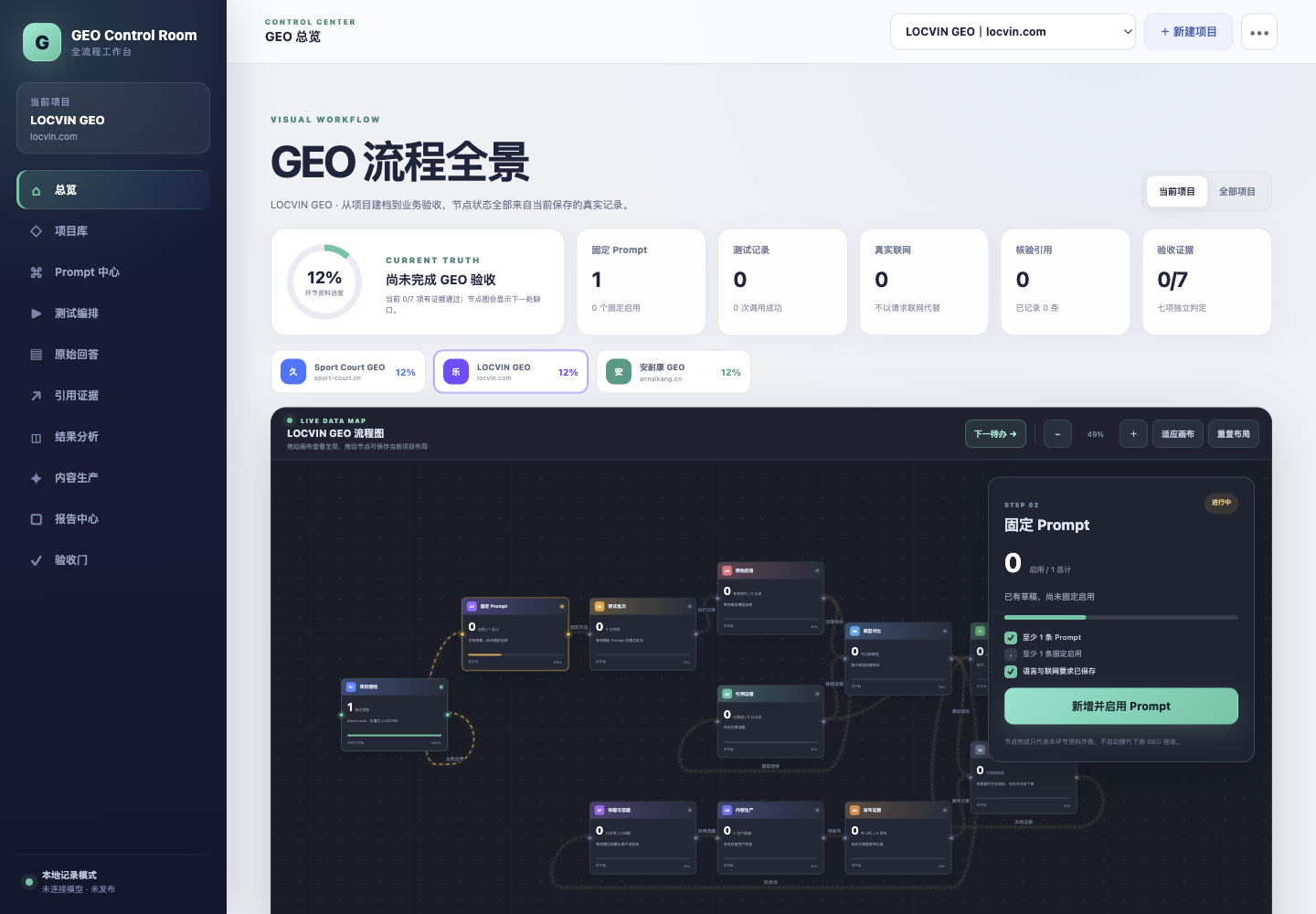
The workbench displays the project process and independent acceptance page; the unverified status in the interface is also retained as is.
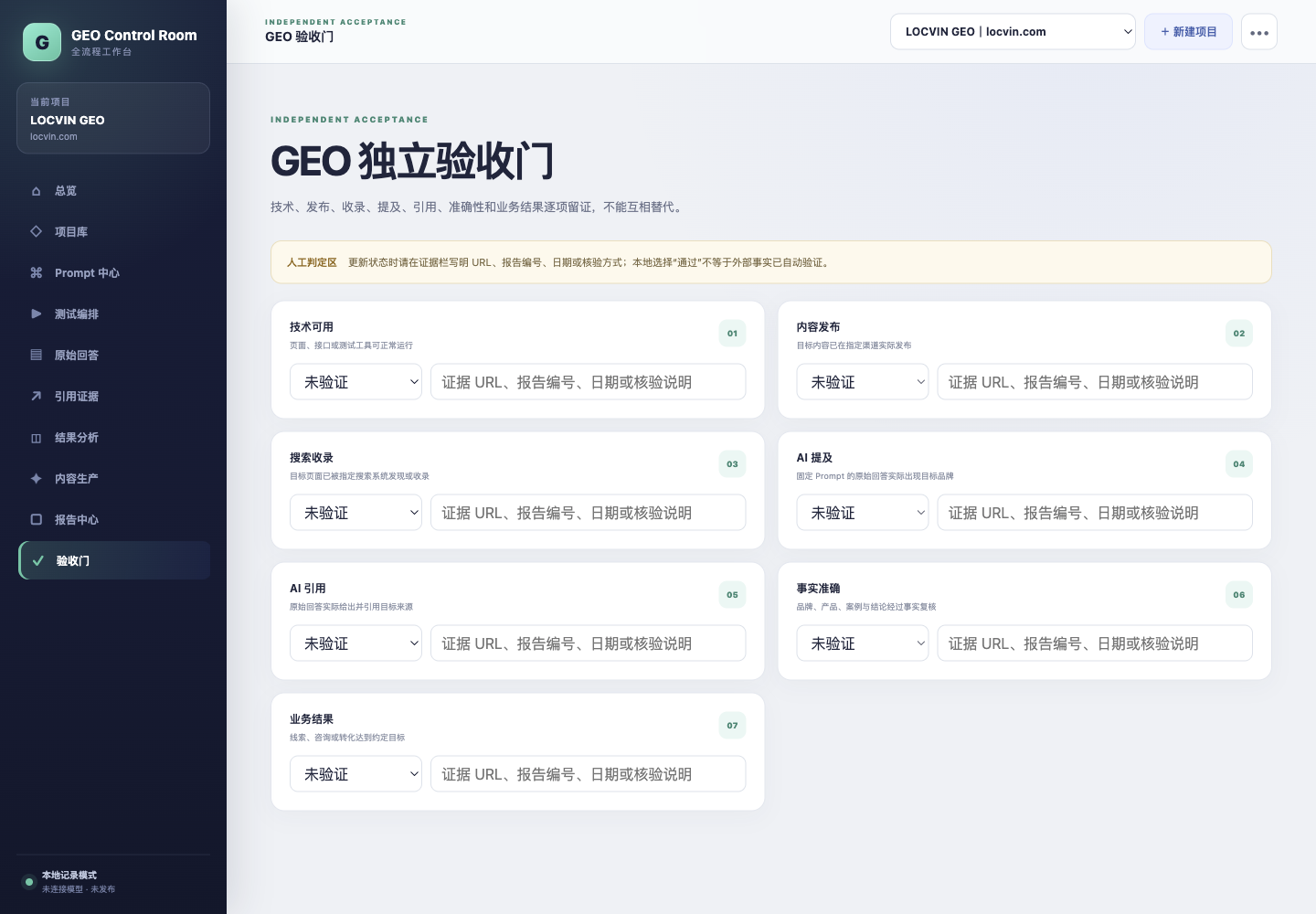
Not the inclusion rate, not the AI mention rate, nor the ranking, inquiry or transaction results.
AI can sort them in batches, but humans still have to check publication, inclusion, citation validity and factual accuracy.
The workbench is responsible for putting the evidence together, and does not say "finished" as "effective" for others.
Students start from their own brand issues or content tasks and build a minimal workbench that can continuously add evidence.
Divide a sentence of fuzzy judgment into six levels: content, publication, inclusion, mention, citation and business results.
First use the three types of information: task, content and evidence to create the first version of the record.
Let AI find brand mentions, quote links, and things to check from a real answer.
Write clearly what counts as evidence and what can only be labeled as unknown.
In the class, you start from your own brand issues and build a hierarchical evidence table; you learn verification methods and do not promise rankings or inquiry results.
Explain the problem you want to solve, the existing materials, and what you want to deliver in the end, and then determine the appropriate course and practice methods.
Communicate training needs