
Relying on people to remember file locations
The information is scattered in different folders and cannot be found if someone comes and goes.
The most time-consuming search method in the company is the phrase "probably which folder it is in." We keep the originals, create new directories and conduct offline searches: you can find results by entering keywords, and you can also return to the location of the original files. AI is responsible for categorizing and sorting out conflicts, and humans judge which ones are still valid.
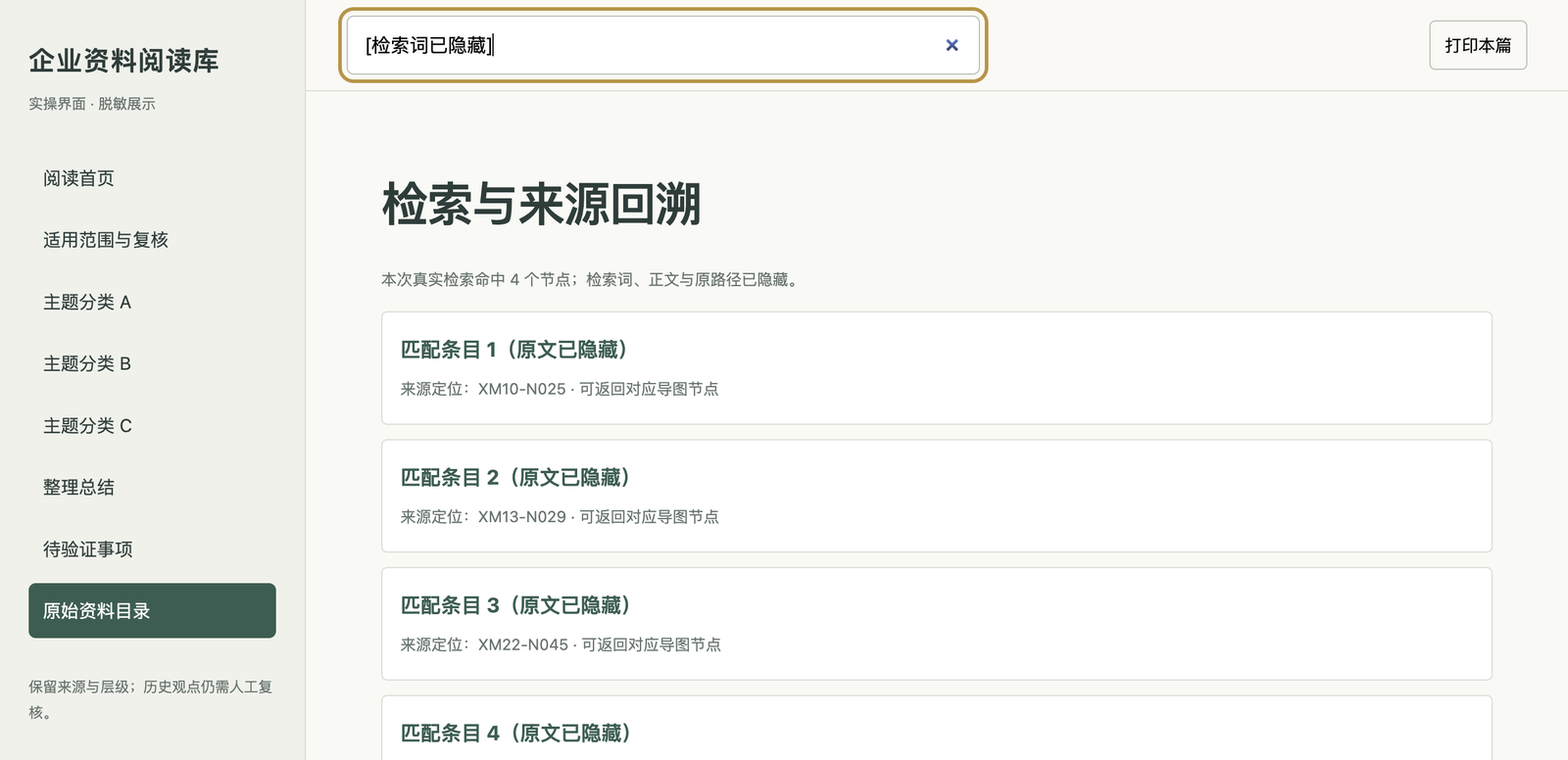
The directory structure and retrieval process are true, and the client and internal text are hidden.
Everyone saves files according to their own habits and leaves multiple versions of the same content. Even if you find the answer, you don’t know whether it is still valid or where the original text is.
The information is scattered in different folders and cannot be found if someone comes and goes.
They all look the same, and it’s hard to tell which one is the latest and which one is outdated.
I found a conclusion, but I can’t tell where it came from or where the original data is.
Leave the originals alone, create another directory and search offline. The following is the complete process of a real search.
These numbers only illustrate the scope of this round of consolidation and do not mean that all content has been fact-verified.
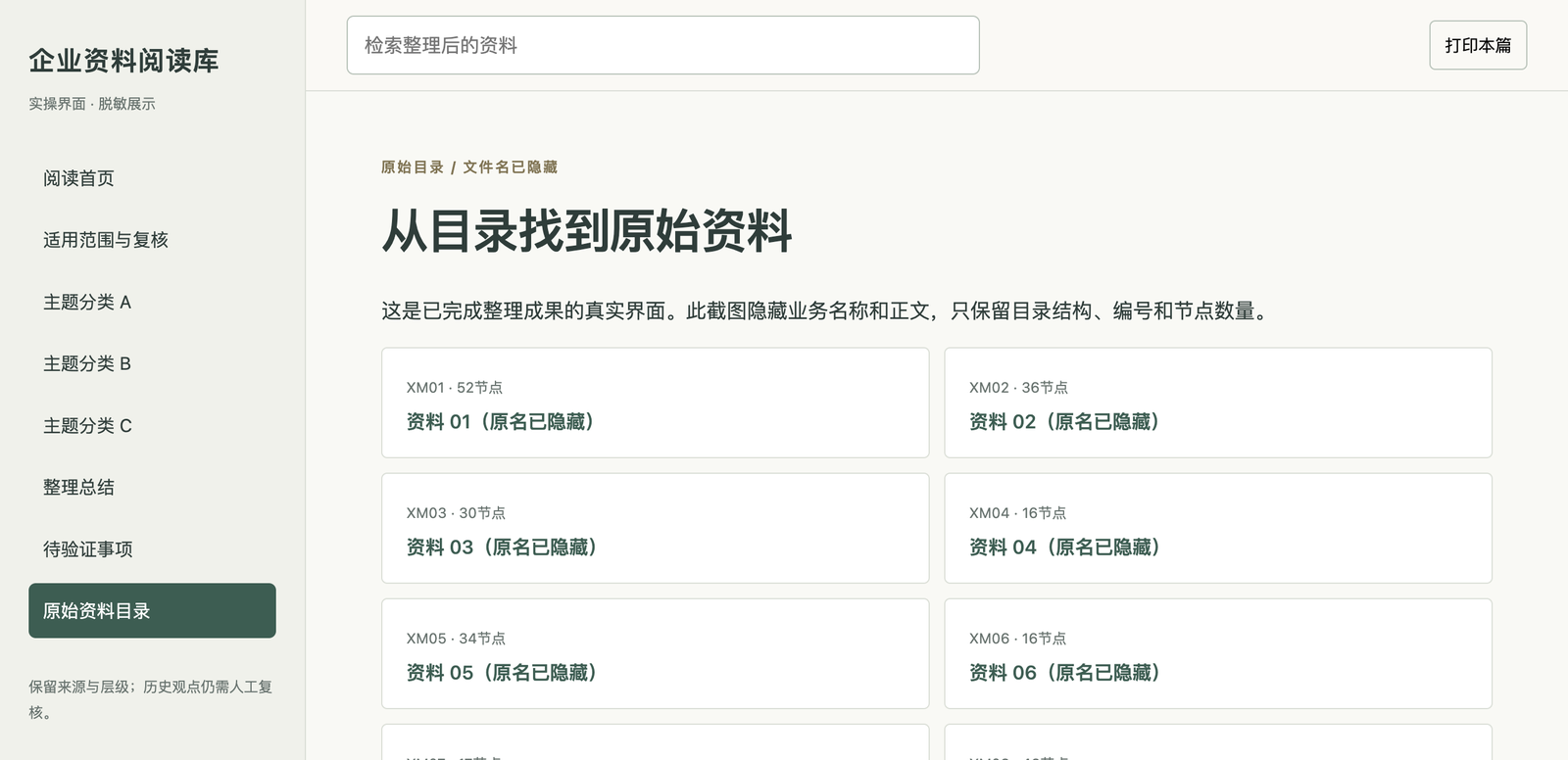
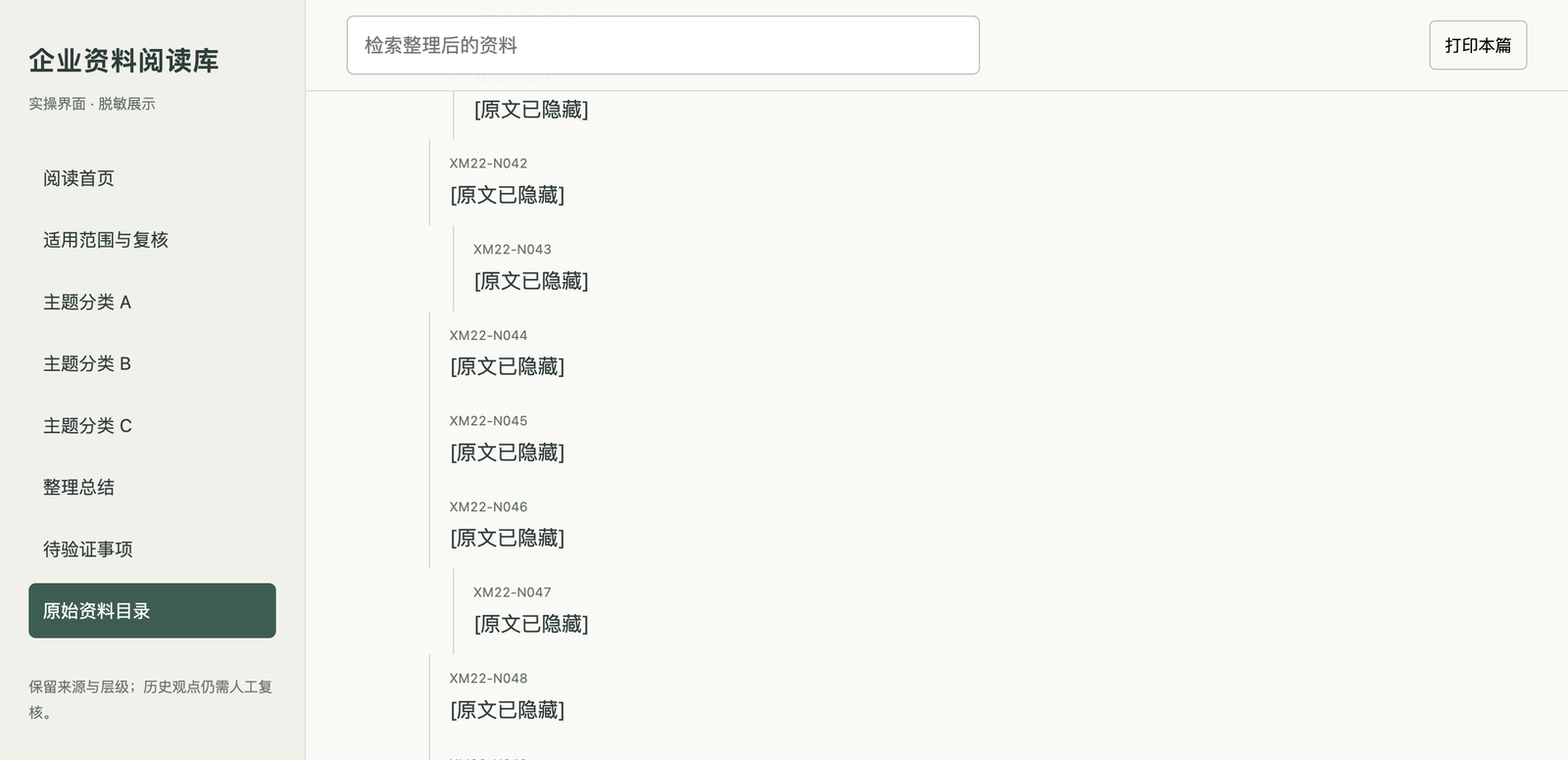
AI classifies documents by subject and creates keyword indexes; humans confirm which version is valid and which content can be made public. When the answer is found, it must be possible to return to the original file.
AI is responsible for making information easy to find, and humans are responsible for determining whether the content is still correct, applicable, and public.
The page displays a set of completed XMind data collection evidence; the class does not limit the format. Students can bring a small batch of common PDF albums, Excel quotations, Word contracts or scanned copies to run through the method first. Whether the scanned document can be identified will be checked on site first.
Let AI look at your files and folders and give you first categorization suggestions.
Let each result have its source, and you can go back to the original file for verification.
Pick out conflicting content and wait for others to judge it, rather than letting the AI merge it on its own.
Make it clear what content may be out of date and what information cannot be made public.
Bring a small batch of your own files to class and practice cataloging, keyword retrieval and source tracing; the scale can be small, but the method must be complete.
Explain the problem you want to solve, the existing materials, and what you want to deliver in the end, and then determine the appropriate course and practice methods.
Communicate training needs